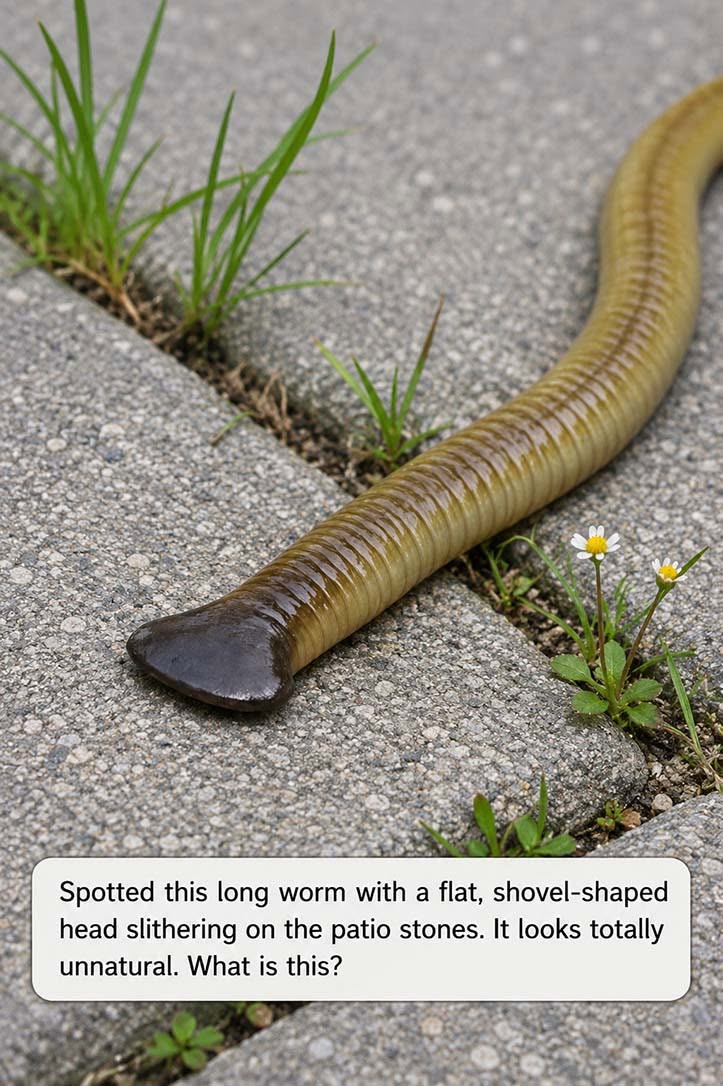
Originally native to Southeast Asia, hammerhead worms have spread to many other parts of the world through the transport of soil and potted plants.
Why They Look So Strange
The first thing people notice is the head. Instead of a rounded tip like most worms, the front of the body spreads outward into a shovel or crescent shape.
Their movement also adds to the unsettling appearance. Rather than wriggling like an earthworm, hammerhead worms glide smoothly across surfaces using tiny hair-like structures called cilia on the underside of their bodies. Combined with their shiny skin and elongated shape, the result looks almost unnatural.
How to Identify One
Hammerhead worms are fairly easy to recognize once you know what to look for:
Long, flat body
Distinct hammer or shovel-shaped head
Slimy or glossy appearance
Brown, gray, or striped coloring
Smooth gliding movement
They’re most often spotted in damp areas after rain, under rocks, around gardens, or on patios and sidewalks.
Where They Come From — and Why They Spread So Easily
These worms are invasive in many countries outside Asia. They usually arrive hidden in moist soil, nursery plants, or landscaping materials.