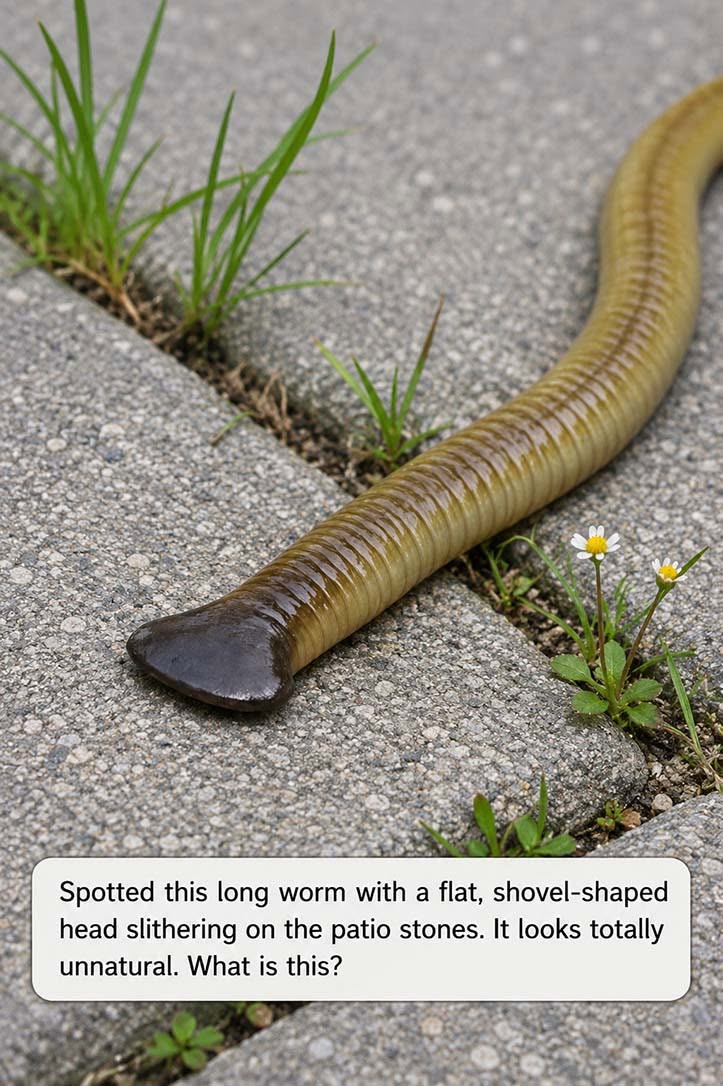
Once introduced, they spread quickly because of their unusual reproduction method. Hammerhead worms can reproduce by fragmentation. Even a small piece of the worm can regenerate into a completely new worm.
That means cutting one in half often makes the problem worse instead of solving it.
Are They Dangerous?
Hammerhead worms are not considered dangerous to humans or pets in the way venomous insects or snakes are. They do not bite or attack people.
However, they produce toxic slime that can irritate skin, so it’s best not to touch them with bare hands.
The larger concern is environmental. Hammerhead worms prey heavily on earthworms, which are essential for healthy soil.
Why Earthworms Are Their Main Target
Earthworms play a huge role in gardens and ecosystems by aerating soil and helping break down organic matter. Hammerhead worms hunt and consume them using sticky mucus and digestive enzymes.
Once they capture an earthworm, they essentially dissolve parts of the prey externally before consuming it. In areas with growing hammerhead worm populations, this can reduce earthworm numbers and negatively affect soil quality.
The Toxin Inside Their Slime
Scientists have discovered that some hammerhead worms contain tetrodotoxin — the same neurotoxin found in pufferfish.